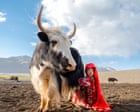
An Afghan girl calmly milks a giant yak: Daniel Malikyarâs best photograph
âIn the Pamir Mountains, thereâs salted yak milk every morning for breakfast. You stay warm at night on the floor in the yurt burning yak dung in the furnaceâ
My parents and grandparents migrated to the US from Afghanistan in 1979, just a few weeks before the Soviets invaded. I grew up in Los Angeles, but would visit my grandfather in Virginia once a year. He would always make photographs and film little interviews. It was his enthusiasm in capturing moments of our everyday lives that sparked my interest in documenting the world around me.
I was six when 9/11 happened. From that point on, the domestic and global perception of my motherland was always driven by the negative connotations drawn from the headlines â terrorism, war, images of sandstorms, guns and desperation. But at home in LA, I would see the beauty of our culture, the food, the handicrafts, the art we had on the walls, the music and poetry, and the stories, artifacts and photographs my parents had from their time in Afghanistan. Their photographs from the 60s and 70s showcased the country at a time when it flourished. One day, I told myself, Iâm going to make a project that shows the world another side of this incomplete story.
Thatâs the point Iâm at today, having made many trips to Afghanistan since 2018, each focused on a different province or region. Iâve had the opportunity to photograph over 55 countries around the world, including many places where I donât speak the language, but I always try to approach every scene honestly and ensure itâs a situation in which there is permission and collaboration. It was very important to my father that I grew up able to speak our mother tongue: that connection has allowed me to discuss my intentions in fluent Dari and create a level of understanding that would not exist for someone viewed as an outsider.
This photograph took place in a remote village in the Pamir Mountains, one of the highest inhabited elevations in the world, where a very small population of Kyrgyz nomads still exists. The Kyrgyz move three to four times throughout the year, following the grazing lands for their livestock. Itâs a very undocumented place. The people do not have visitors very often, so they have no reference points or agendas for posing or presenting themselves. Theyâre just honestly going about their day, and thatâs why they look so effortless in the photographs.
While staying in the villages, thereâs salted yak milk every morning for breakfast and yoghurt made with yak milk as a side dish for dinner. You stay warm at night on the floor in the yurt burning yak dung in the furnace. This photograph documents a girl named Shargha, looking calm and casual as she milks a stoical-looking yak. In this region, the women wear red veils before marriage and white ones after â the clothing is very visually distinctive and made for an interesting juxtaposition against the beautiful landscape.
Afghans have often been presented through the lens of either villain or victim. What I hoped to do was show them with dignity and honesty. When I photographed kids, I tended to get down low, mirroring their eye level. Thereâs a power to that, and thatâs why this photograph feels heroic and larger than life. Looking at it now, I can relive what I was experiencing as I made it â the sound of the creek in the background and the wind rustling through the little patches of grass, even the noises the yaks made.
As restrictions on photographing in Afghanistan tighten, this work feels increasingly important. My mother hasnât returned since 1979: she lived there during the golden era and wants to remember it that way. But Iâve seen how she lights up when she looks at my images, and the curiosity they spark â sheâs learning about her own country through the lens of her son, and now sheâs excited at the idea of jumping on a flight to see it once again with me. What a beautiful, full-circle, homecoming story that would be.
Afghanistan by Daniel Malikyar, is published by teNeues on 4 August.
Born: 1995, Los AngelesHigh point: Making my Afghanistan project has been the most fulfilling chapter of my career so far. Iâve never felt such a spectrum of emotions while creating a body of work. For years, I had been developing a more complete form of storytelling â one that could live across a book, documentary series, fine art exhibition and philanthropic work. Seeing that vision take shape through a project rooted in my own heritage has felt deeply meaningful, and Iâm grateful to experience each stage of the process.Top tip: Thereâs no better time than now. I first realised that while out in the field making photographs, but it quickly became a philosophy for life. It reminds me to stay present and appreciate the importance of the moment.