Nicaraguaâs congress announces âwork planâ to suspend elections
US secretary of state says international community should âjoin forcesâ against authoritarian Ortega regime
Nicaraguaâs congress, controlled by the countryâs long-serving president, Daniel Ortega, has announced a âwork planâ to implement the authoritarian leaderâs order that the country should no longer hold elections.
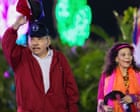
The UN and the US strongly condemned Sundayâs announcement by Ortega, who has been in power since 2007 and, after a controversial constitutional change last year, now governs alongside his wife, Rosario Murillo, as âco-presidentâ.
During the ceremony marking the 47th anniversary of the 1979 Sandinista revolution, in which he helped overthrow the brutal dictatorship of Anastasio Somoza GarcÃa, Ortega said he would work with congress to pass new laws that would âbuild a wallâ against the opposition.
On Tuesday, the Ortega-controlled National Assembly issued a statement saying that, under the pretext of âensuring peace, security, stability and the continuity of achievements in the fight against povertyâ, it was âbeginning the necessary analysis to draw up a work plan to implement the presidentâs directivesâ.
Although the Ortega-Murillo regime has already overseen a profound erosion of democracy â marked by the violent suppression of protests, the imprisonment of thousands of people and the forced exile of nearly 1 million Nicaraguans â Sundayâs announcement marked a significant rhetorical escalation that is now being put into practice by congress.
On Wednesday, the UN high commissioner for human rights, Volker Türk, called on the Nicaraguan authorities to âreopen civic space, and restore the rule of law. People of all political viewpoints must be allowed to vote and run for office, in line with the stateâs international human rights obligations.â
The US secretary of state, Marco Rubio, who refers to the countryâs government as the âMurillo-Ortega dictatorshipâ, said in a statement on Tuesday that âthe Nicaraguan people have the right to choose their own leaders through democratic electionsâ and the US âcalls on the international community to join forcesâ against the regime.
Ortegaâs uninterrupted period of almost 20 years in office is not his first spell in power. He led the junta that took office after the Sandinista revolution and, in 1984, was elected president, remaining in office until 1990.
His current term, to which he was elected after he outlawed opposition parties and jailed all opposition presidential hopefuls before the 2021 election, had been due to end next November. However, last yearâs constitutional changes extended the presidential term from five to six years.
Despite the National Assemblyâs announcement, it remains unclear whether the 2027 elections will be scrapped altogether or whether Ortega and Murillo will run unopposed.