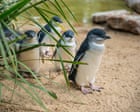
Penguins and dolphins among nearly 400 Australian species under threat from bird flu as âtrue extent of disasterâ revealed
Assessment of more than 2,000 native species warns nearly one in five at high risk of deadly H5N1, including parrots, fur seals and quolls
Follow our Australia news live blog for latest updates
Almost 400 native Australian bird and mammal species have been assessed as being at a high risk â or worse â from the deadly H5N1 bird flu virus, a federal government assessment has revealed.
Some of Australiaâs most beloved animals â including species of penguins, fur seals, quolls, dolphins, more than 300 birds and the Tasmanian devil â are considered at least high risk from the virus, meaning they could suffer âsevere reduction in population size or viabilityâ or worse if it reached them.
Five species are considered at extreme risk, meaning âunlikely to survive where the virus occursâ.
These are all birds that breed in single islands or groups of islands, such as the endangered Christmas Island frigatebird and the critically endangered herald petrel, which only breeds on Raine Island in the far north of the Great Barrier Reef.
More than 80 endangered and critically endangered species are also considered to be facing at least a high risk from an infection, suggesting that the H5N1 strain of bird flu will push them further towards extinction.
The federal government released the results of the assessment of more than 2,000 native species, carried out with Charles Darwin University and BirdLife Australia, on Tuesday evening. Nearly one in five have been rated as facing extreme, very high or high risk.
Australiaâs three resident seals â the Australian fur seal, the New Zealand fur seal and the Australian sea lion â are all considered at very high risk. The Tasmanian devil and the eastern quoll, both assessed as high risk, are the land mammals at greatest threat.
The extent of the analysis and the number of species considered at high risk underlines expert fears for the threat to local wildlife.
Prof John Woinarski, a leading conservation scientist at Charles Darwin University who helped devise the analysis, said: âThis has sketched out a more bleak picture than perhaps we considered previously.
âWe are going to get major consequences for many species and our bird and mammal diversity is likely to suffer substantial impacts from this disease.â
Prof Hugh Possingham of the University of Queensland, a lead councillor at the Biodiversity Council, said the analysis was âa good first cutâ but it should have been released two years ago.
âA year ago we needed a priority action list and we should have been taking action then because everyone knew that it was coming,â he said.
Kate Millar, the chief executive of BirdLife Australia, said while the list of species at high risk or worse was âlongâ and âincredibly confrontingâ it also meant Australia could âprioritise and take action protecting the species most at riskâ.
Jack Gough, the chief executive of the Invasive Species Council, said the âlist of doomâ revealed âthe true extent of the disaster facing Australian wildlifeâ.
He said it demanded a âserious responseâ from the government âbut instead we have had cuts to on-ground environment programs nationallyâ.
âAlmost one in five Australian mammals and birds has been rated by the government as at risk of severe population reductions or even extinction,â he said. âThis includes quolls, parrots, seals and pelicans.â
The council is among several conservation groups calling for the government to fund a $200m package to scale up on-ground efforts to protect wildlife, including feral animal controls.
The government has said it has committed $113m to prepare for bird flu, including $47m âto accelerate protective actionâ for threatened species and biodiversity.
The environment minister, Murray Watt, said the risk analysis had already informed investments to protect captive animal populations, removing feral threats and inoculating against more common diseases.
âWe have been investing in these types of projects across the country for several years in preparation for a bird flu outbreak, and as a result, our native species are in a better position to withstand the H5 incursion.â
Jess Abrahams, national nature campaigner at the Australian Conservation Foundation, said: âAustralia is already in the midst of an extinction crisis and we need to be prepared for just how harrowing this could get.
âAustralians love nature and we all need to be emotionally prepared for the onslaught that could occur and know what to do if they come across a sick, dying or dead animal.â
The H5N1 virus has killed millions of birds and mammals since it spread from Europe in 2021 to every continent on the planet.
Australia was the final continent to be breached six weeks ago, when infected Antarctic and subantarctic migratory seabirds were found dead and sick in Western Australia and South Australia.
The virus has now been confirmed in more than 100 individual birds and air surveillance has recorded the first mass mortality event from the disease, in South Australia. Detections have also been confirmed in Victoria, New South Wales and Queensland.