A huge AI datacenter is planned near Mar-a-Lago. The Everglades could pay the price
Plans for hyperscale datacenter in Palm Beach county prompt concerns over water and electricity demands
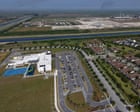
About 16 miles (26km) west of the Mar-a-Lago estate on President Donald J Trump Highway, near the northern edge of the Florida Everglades, developers have proposed a hyperscale datacenter on a 202-acre (82-hectare) parcel of land surrounded by water. Local environmentalists warn that the proposed 600MW datacenter in western Palm Beach county could damage the wetlands, which the federal government and the state of Florida have spent a combined $6bn to restore after decades of drainage and development.
One concern is that the datacenter could exacerbate an existing issue of toxic bacterial blooms in a water system which has already been stressed by drought, fertilizer runoff and warm water temperatures. In recent summers, the bright blooms of blue-green algae have covered nearly half of Lake Okeechobee, which feeds into the Everglades.
The cyanobacteria blooms produce a toxin known as microcystin, which can make people and animals sick and contaminate drinking water. On 30 July the Florida department of health in Palm Beach county issued a health alert about cyanobacteria presence in the lake.
Reinaldo Diaz grew up in Palm Beach county and founded Lake Worth Waterkeeper, a non-profit dedicated to protecting the watershed. He said waste heat from the proposed datacenter, called Project Tango, could increase the water temperatures in the surrounding watershed, putting the Florida Everglades further at risk of toxic bacterial blooms.
âOur watershed is really complex,â Diaz said. âOurs is more like a spiderweb. Thatâs why the impacts would be far reaching.â
North-east of the proposed Project Tango site, the habitat changes quickly. Beneath a canopy of bald cypress and native palm trees, the Loxahatchee River winds through one of the few surviving remnants of the northern Everglades. During the Guardianâs recent visit the buzz of dog-day cicadas overwhelmed the distant hum of traffic. Though the Everglades once stretched much farther north, water still circulates through this interconnected landscape through canals, sugarcane fields and grassy waters to surrounding lakes and marshes.
Diazâs environmental concerns, like many, are linked to the amount of electricity a 600MW datacenter could consume, enough to generate enormous amounts of heat. Based on US Energy Information estimates of residential electricity use, at peak capacity a 600MW datacenter could use as much power as half a million US homes. The high energy use of datacenters can also mean costly upgrades to the power grid, which can drive up electricity costs for households.
Earthjustice attorney Christina Reichert is representing neighbors with the Western Palm Beach Community Alliance in opposition to Project Tango. The group has challenged the developersâ efforts to convert a previously approved 2016 plan for warehouses and a server farm on the light industrial site into a hyperscale datacenter. Reichert said a hyperscale datacenter could have offsite water, air and sound impacts not covered by light industrial use zoning. âOne of the concerns we had about this location is the risk of increasing the heat in this area because it could lead to algal blooms in that canal that could compromise drinking water and Everglades restoration,â Reichert said.
Last month President Trump downplayed the concerns of datacenter neighbors at a press conference to double down on his non-binding pledge for datacenter developers to bear their own electricity costs. âYou have to convince your community how great these things [are]. You canât fight it. You have to go with it,â he said. But Sue Ellen Loyzelle, who lives in the planned community of Arden next door to the Project Tango site and is a founding member of Western Palm Beach Community Alliance, said regulations needed to be in place to reduce the potential effects to communities.
âWe donât want our bills to go up, but itâs more than that,â she said. âWhat is all of this going to do?â Loyzelle said the Ratepayer Protection Pledge was a start. âYeah, thatâs a guardrail and weâre happy for that guardrail,â she said. âBut thereâs got to be a lot more guardrails.â
At a Palm Beach county zoning last month, residents spoke about the proximity of the proposed Project Tango datacenter to a local elementary school (about 1,200 feet). They said they were concerned about the potential noise, higher traffic, heat pollution, lower property values and higher energy bills that the project could bring. After more than 12 hours of testimony, commissioners voted 5-1 to deny an expansion of the proposed datacenter.
Still, two more administrative applications from the developers that could add square footage to the datacenter remain on the table. âThereâs nowhere in Palm Beach county where it would be acceptable to put one of these,â Diaz said. âBut the place they are choosing is egregious.â
The proposed Project Tango site is across the street from a pump station that serves as the first step in pushing freshwater to the southern Everglades. While water use has been a major concern with datacenters, the applicant for the project, PBA Holdings, Inc, says this 600MW facility would be different. At the Palm Beach county commissioners zoning hearing in July, project manager Ernie Cox said that the proposed datacenter would use a closed-loop cooling system that recirculates water, which could reduce the projectâs water consumption. But Diaz said heat generated by the facility would still need to go somewhere and even a few degrees increase in temperature could fuel bacterial blooms in nearby waterways that are connected to the Everglades and nearby drinking water systems. Emerging research suggests that even much smaller datacenters can increase downwind air temperature by as much as 2C.
Many of the ingredients for bacterial blooms, like phosphorus and nitrogen, already exist in nearby canals from decades of agricultural runoff from nearby farmland, where sugarcane is the dominant crop. Even warming the water up a couple degrees could be like adding fuel to the fire, Diaz said.
A health and safety assessment commissioned by PBA Holdings acknowledges that the datacenter could heat the air 1C to 2C (2F to 4F) around the cooling equipment, but dismisses concerns that the heat would reach the nearby community and school, explaining that prevailing winds would carry the heat in the opposite direction. The assessment doesnât address the risk for toxic bacterial blooms. In regulatory filings, PBA Holdings reported spending $20m on county approvals and ensuring the site has the power reliability for data and information processing. The developers say they chose the site because of its proximity to the largest natural gas power plant in the United States, the West County Energy Center, operated by Florida Power & Light Company.
Cox did not respond to specific questions about the proposed Project Tango datacenter or its potential to worsen toxic algal blooms in Palm Beach county, but in a statement to the Guardian US, he wrote: âWe are disappointed with the Commissionâs decision. We re-confirmed our commitment to all conditions asked of us associated with our request and we addressed concerns through in-depth technical studies and analysis. We remain committed to helping meet the regionâs growing critical infrastructure needs and will be taking time to evaluate our options moving forward.â
The homeowners association for the neighboring community of Arden, city of Westlake, town of Loxahatchee Groves, Everglades coalition, Palm Beach county classroom teachers association, the school board of Palm Beach county, a Florida representative and a Florida senator have all written letters of opposition to the Project Tango datacenter.
Next month, Palm Beach county commissioners will vote on a moratorium against large-scale datacenters. Several other counties in Florida have already adopted similar measures. Loyzelle was an elected official in the town of Cutler Bay, south of Miami, before she moved to Arden nearly five years ago. She said such moratoriums are necessary until regulations can be put in place to lessen the impact of hyperscale datacenters.
âI would like to not see them at all. I know thatâs not a reality. If there was to be one, it would have to be far away from homes because of the sound and the health impacts of air pollution,â she said. âBut the water, I donât think Florida could handle it anywhere with the water issues.â
This article was amended on 12 August 2026. A previous version said the proposed datacenter was south-west of Mar-a-Lago. It is west of the estate.